
Blog
How Indiana Staffing Services Are Addressing the Safety-Skills Balance in Industrial Hiring
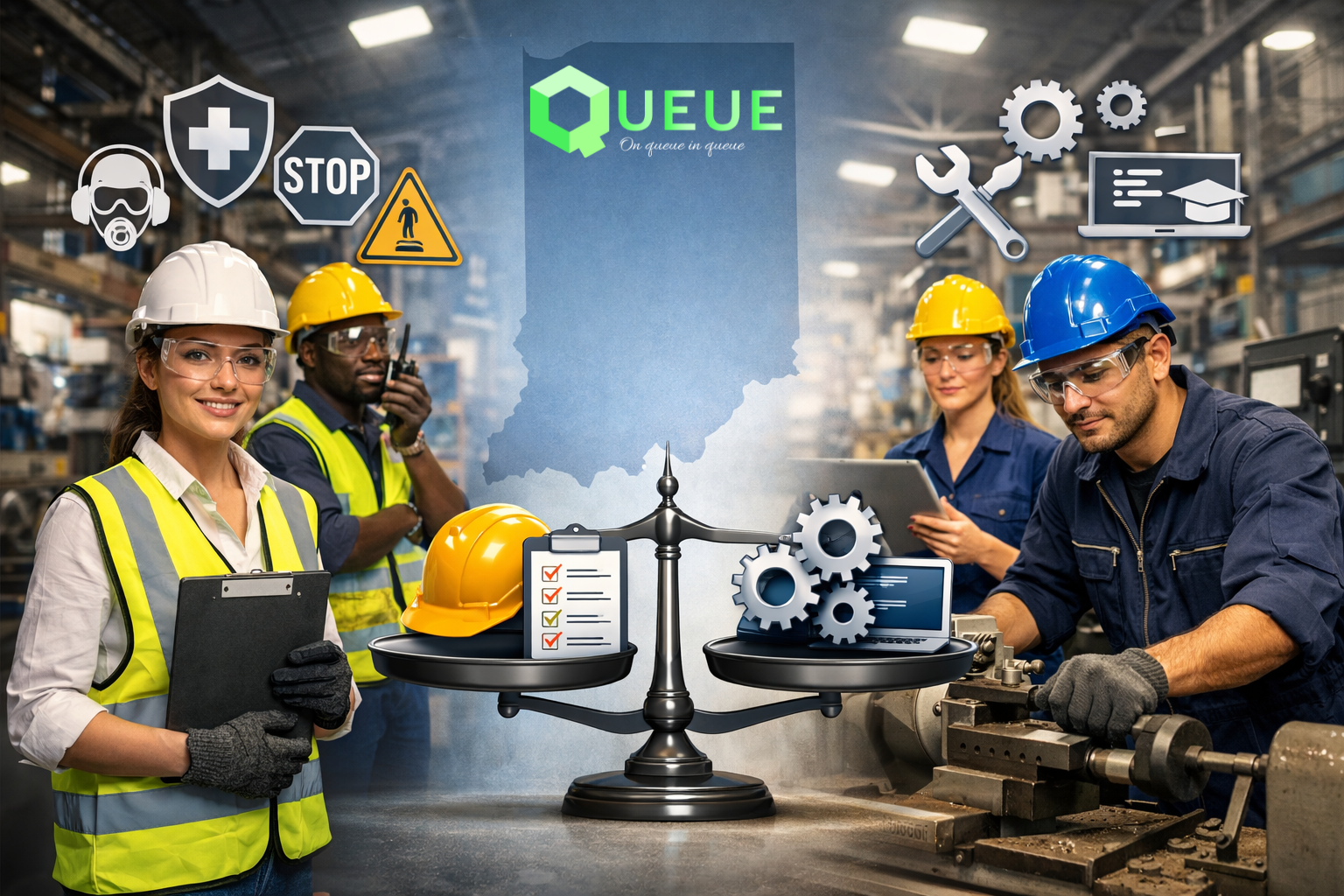
If you walk into any warehouse or manufacturing plant and notice everyone moving with purpose. Forklifts backing up with their warning beeps, pallets stacked high, and people wearing hard hats, steel-toed boots, and safety vests. That means a careful balance went into hiring every single person on that floor. Each worker had to prove they could do the job well AND do it safely. That’s harder than it sounds.
Indiana staffing services spend a lot of time thinking about this balance. Because if you get it wrong, people can get hurt, companies can shut down, and projects can fall apart. Get it right, and everyone wins. Workers stay safe, businesses run smoothly, and Indiana’s industrial sector keeps growing.
Why Safety and Skills Both Matter
Think about it this way. You could hire someone who can operate a forklift like a pro. They’re fast, efficient, and know all the technical moves. But if they skip safety checks or take shortcuts, that’s a problem waiting to happen.
On the flip side, you could hire someone who follows every safety rule in the book. They wear all the right gear and never rush. But if they can’t actually do the job well, that doesn’t help either. Production slows down, other workers have to pick up the slack, and the frustration builds. Indiana staffing services have figured out that you can’t pick one over the other. You need both. A skilled worker who doesn’t care about safety is dangerous. A safe worker who lacks skills can’t keep up with the pace. The sweet spot is finding people who bring both to the table.
What’s Changed in Industrial Hiring
Ten years ago, hiring for industrial jobs looked different. Managers focused mainly on whether someone could do the physical work. Can you lift 50 pounds? Can you stand for eight hours? Can you read a tape measure? If yes, you were probably hired.
Safety training came later, usually on the job. New hires learned by watching others. Sometimes they learned by making mistakes. It worked okay when things were simpler. But today’s warehouses and factories are more complex. There’s more automation, more equipment, and higher expectations.
Indiana staffing services have had to evolve. They now screen candidates for safety awareness from day one. They ask about past training. They look for certifications. They want to know if someone has worked in environments where safety was taken seriously. This happens before anyone sets foot in a workplace.
The change makes sense when you look at the numbers. Workplace injuries cost companies money, time, and reputation. One serious accident can shut down an entire operation. Indiana staffing services know that preventing problems is better than dealing with them.
How Screening Works Now
Here’s what modern screening looks like for light industrial staffing. It starts with basic questions about experience. But it quickly moves into specific scenarios. Have you ever had to stop work because something seemed unsafe? What would you do if you saw a coworker skipping a safety step? How do you handle pressure when deadlines are tight?
These questions reveal a lot. Someone who brushes off safety concerns probably will do the same on the job. Someone who takes them seriously shows they understand what’s at stake.
Then comes skills verification. For many positions, candidates need to show they can actually do what their resume says. This might mean a practical test. Operating machinery under supervision. Reading technical documents. Following multi-step procedures. Indiana staffing services make sure that everyone is set up for success.
Background checks play a role too. Previous safety violations matter, and so does job history. Someone who job-hops every few months might struggle with learning proper procedures. Someone with steady employment and good references usually makes a safer bet.
The Training Gap Problem
Many experienced industrial workers are retiring at a constant rate. Younger workers are entering the field without the same hands-on experience. This creates a gap that Indiana staffing services need to bridge.
Older workers learned skills over the years on the job. They developed instincts about when something didn’t look right. They knew the sounds and smells that meant trouble. Younger workers are often smart and capable, but they haven’t had time to develop those instincts yet.
Light industrial staffing agencies have responded by connecting workers with better pre-employment training. Some partner with local technical schools; others work with manufacturers to create apprenticeship-style programs. The goal is to give new workers both the technical skills and the safety mindset they need.
This approach helps everyone. Workers get jobs they’re actually prepared for. Employers get team members who can contribute from day one. And the overall safety record improves because fewer people are learning through trial and error.
The Growing Role of Technology
Technology has changed how Indiana staffing services evaluate candidates. Online assessments can test safety knowledge before an interview even happens. Virtual reality simulations let candidates practice equipment operation in a risk-free environment. Digital tracking systems monitor which certifications someone holds and when they expire.
This technology doesn’t replace human judgment. But it adds another layer of information. A candidate might interview well and have a great resume. But if they can’t pass a basic safety knowledge test, that’s a red flag worth paying attention to.
Some industrial staffing services now use predictive tools that analyze past hiring patterns. They look at which combinations of skills and traits lead to long-term success. This helps them spot promising candidates who might not fit the traditional mold but could excel with the right support.
What Employers Are Looking For
Talk to any hiring manager in Indiana’s industrial sector, and they’ll tell you the same thing. They want people who show up ready to work. But “ready to work” means something specific now.
It means having basic safety certifications already in hand. OSHA 10 or OSHA 30 training. Forklift certification if the job requires it. First aid knowledge. It means understanding that safety procedures exist for a reason, not just to slow things down. Indiana staffing services…are increasingly prioritizing candidates who come prepared with these certificates; they know that workers who are mindful of safety measures adapt faster, reduce workplace risks, and add value from day one.
It also means having the right attitude. Being coachable. Asking questions when something is unclear. Speaking up if something looks dangerous. These soft skills matter just as much as technical abilities.
Industrial staffing services screen for these qualities because they know that’s what employers need. A candidate with perfect technical skills but a poor attitude toward safety won’t last long. A candidate with solid skills and the right mindset becomes a valuable team member.
The Real Cost of Getting It Wrong
When safety and skills don’t balance, the consequences add up fast. An injury can sideline a worker for weeks or months. Someone else has to cover their shifts. Productivity drops. Other workers get stretched thin and stressed out.
Then there are the financial costs. Medical bills. Workers’ compensation claims. Potential legal issues. Equipment damage. Lost time investigating what went wrong. The numbers get big quickly.
But the human cost matters most. Nobody wants to see a coworker get hurt. Workplace accidents affect morale. They create fear and anxiety. They make people question whether their own safety is being taken seriously.
Indiana staffing services understand these stakes. That’s why they’ve invested so heavily in getting the safety-skills balance right. It’s not just about filling positions quickly. It’s about placing people who will thrive and stay safe.
Regional Differences Within Indiana
Indiana’s industrial landscape varies quite a bit. Northern Indiana has a strong manufacturing base with companies that have been around for generations. Central Indiana, especially around Indianapolis, has massive logistics and distribution centers. Southern Indiana has more specialized manufacturing and automotive suppliers.
Each region has slightly different needs when it comes to the safety-skills balance. A warehouse in Indianapolis handling e-commerce fulfillment has different requirements than a metal fabrication shop in Fort Wayne. The safety concerns aren’t identical. The skill sets vary.
Good Indiana staffing services know these regional differences. They understand local industry norms. They know which certifications matter most in which areas. They maintain relationships with employers across the state so they can match candidates to the right opportunities.
This local knowledge makes a real difference. A candidate who’s perfect for one type of facility might struggle in another. Understanding these nuances helps create better matches and reduces turnover.
Final Thoughts
The industrial sector drives a big part of Indiana’s economy. Thousands of people across the state go to work every day in warehouses, factories, and distribution centers. These jobs matter. They support families and communities.
Getting the hiring right matters too. When Indiana staffing services successfully balance safety and skills, everyone benefits. Workers find positions where they can succeed. Employers build reliable teams. The whole industry becomes stronger and more sustainable.
This isn’t easy work. It requires constant attention, ongoing training, and a commitment to doing things right rather than doing things fast. But the results speak for themselves. Safer workplaces. Better retention. Stronger businesses.
The industrial staffing services that understand this balance aren’t just filling positions. They’re building Indiana’s industrial future, one careful placement at a time. And in an industry where both people and productivity matter, that’s exactly what’s needed.